Showing posts with label Japanese. Show all posts

Tuesday, March 8, 2022

Grapes: Japanese Pione

 A trip to Japan is on my Bucket List.  I have seen a couple of videos showing how expensive grapes can cost there.  Why? Are they worth the price? The bunch below by Mrs Paley on Instagram cost $55 back in October 2019.  Don't these plump, purple Pione grapes look appealing though?

I want to see them and taste them first-hand. For now, further research, pictures, and videos will do.  


Pione grapes are a large varietal that grows in short, thick, and dense bunches. Each grape averages 2 to 5 centimeters in diameter and has a uniform and plump, round to oval shape. The grape’s skin is thick, smooth, and taut, appearing in shades of dark purple-red. The surface is also covered in a powdery blue-grey bloom, a protective coating that prevents disease and moisture loss. This bloom is edible and can be easily removed by wiping the fruits. Underneath the surface, the flesh is pale, translucent green, aqueous, and firm with a jelly-like consistency. The flesh may also contain a few small seeds or be found seedless, depending on cultivation practices. Pione grapes are aromatic and have high sugar content, ranging from 16 to 18 Brix. The grapes also contain moderate acidity, contributing to the flesh’s sweet-tart, sugary flavor with subtle fruity and wine-like undertones. - Specialty Produce

The flowers appear on the earth; the time of the singing of birds is come, and the voice of the turtle is heard in our land;

13The fig tree putteth forth her green figs, and the vines with the tender grape give a good smell. Arise, my love, my fair one, and come away. Song of Solomon 2

Pione Grapes


**

Tuesday, October 12, 2021

WW2: Hero Dog, Judy the Pointer

 Judy, a purebred pointer, was the mascot of several ships in the Pacific, and was captured by the Japanese in 1942 and taken to a prison camp. There she met Aircraftsman Frank Williams, who shared his small portion of rice with her.

Judy raised morale in the POW camp, and also barked when poisonous snakes, crocodiles or even tigers approached the prisoners. When the prisoners were shipped back to Singapore, she was smuggled out in a rice sack, never whimpering or betraying her presence to the guards.

The next day, that ship was torpedoed. Williams pushed Judy out of a porthole in an attempt to save her life, even though there was a 15-foot drop to the sea. He made his own escape from the ship, but was then recaptured and sent to a new POW camp.

pc: wikipedia


He didn't know if Judy had survived, but soon he began hearing stories about a dog helping drowning men reach pieces of debris after the shipwreck. And when Williams arrived at the new camp, he said: "I couldn’t believe my eyes! As I walked through the gate, a scraggly dog hit me square between the shoulders and knocked me over. I’d never been so glad to see the old girl!"

They spent a year together at that camp in Sumatra. "Judy saved my life in so many ways," said Williams. "But the greatest of all was giving me a reason to live. All I had to do was look into those weary, bloodshot eyes and ask myself: 'What would happen to her if I died?' I had to keep going."

Once hostilities ceased, Judy was then smuggled aboard a troopship heading back to Liverpool. In England, she was awarded the Dickin Medal (the "Victoria Cross" for animals) in May 1946. Her citation reads: "For magnificent courage and endurance in Japanese prison camps, which helped to maintain morale among her fellow prisoners, and also for saving many lives through her intelligence and watchfulness".

pc: wikipedia


At the same time, Frank Williams was awarded the PDSA's White Cross of St. Giles for his devotion to Judy. Frank and Judy spent a year after the war visiting the relatives of English POWs who had not survived, and Frank said that Judy "always provided a comforting presence to the families."

When Judy finally died at the age of 13, Frank spent two months building a granite and marble memorial in her memory, which included a plaque describing her life story.

our beloved Mr Bubbles ❤

Pointer (dog breed)


***

Tuesday, February 16, 2021

My Gray Hair Goals

 I am allowing my hair to go completely gray. I need role-models for this (natural-color) Road  and Season of Life. I want to look good even as a Senior.

 I found an example in a Japanese lady. She exudes confidence.  She has a sense of style.  Most of all, she rocks her gray hair! I prefer my hair length to be at my shoulder; with volume like hers. 

Black-rimmed glasses are on now my radar as they are a good contrast on a head of gray. 


How about her hair?!! -- Artist, Yayoi Kusama (wikipedia)

And even to your old age I am he; and even to hoar hairs will I carry you: I have made, and I will bear; even I will carry, and will deliver you.

Isaiah 46


**

Thursday, June 4, 2020

Uniqlo: Japanese Casual Wear Design We Luv

Introduced to this hot clothing brand via my sister who loves it (so do her 2 daughters).  

I remember  that she dragged us to UNIQLO's grand opening at our local mall.  It was only its second store in Illinois. Had never gone into one of its stores  till that day. 

Crowded.  Asians. Caucasians. Young. Some old. Girls. Boys. Many well-dressed in a simple-cut, relaxed, chic awesome way that only Japanese/Asian designers can pull off.  Of course I was instantly drawn.

My first coat purchase (in 2 colors):


WOMEN DOUBLE FACE HOODED COAT

(pc: Uniqlo)

Dark Navy

Uniqlo knit dress

Uniqlo reversible coat

Uniqlo graphic t shirt

Uniqlo Hybrid Down Cocoon Coat in grey

NIPPON -- Japanese name for Japan


**

Sunday, May 17, 2020

Doing a Marie Kondo During COVID-19

If there's one thing about Coronavirus Season it's the abundance of time to finally look around our home and throw out, use up, or sell what we've accumulated through the years. Hoorah! It's far from over.  But, what's been done so far has led to neatness, feelings of accomplishment, plus we're a few hundred dollars richer. Thank you, Lord!

I use, and encourage others to use, [Kondo’s] basic premise that you should keep something only if it gives you pleasure - B Hammil (via H O U Z Z )

sold!


2 Key Rules

After nearly a lifetime of practice, the Tokyo-based Kondo has developed what she calls the KonMari Method. Its essence is deceptively simple, but (I speak from experience) its implementation can be quite difficult, mainly because of our reluctance to part with possessions.

There are two key tenets to Kondo’s method: Keep only what inspires joy in your heart and organize by category, not spaces.


Keep what you love.

In terms of “sparking joy,” a phrase Kondo uses often in her book, it can be summed up this way: If you don’t love it, get rid of it. Here’s the hard part: She advises a tough-love approach to parse out whether something makes you happy or if you are just simply hanging on to it.

Sort by type, not room. 

One of the primary things that makes Kondo’s approach different is her technique of purging by category. For example, instead of cleaning and organizing your master bedroom closet, she suggests tackling all of your clothes at once. Her point is that you likely don’t have garments stored in just one spot — for example, there are coats in the closet, T-shirts in a bureau, perhaps even seasonal clothes stashed in the attic. Experience has taught her that if you tidy by areas or rooms, the tidying never ends. Instead, she advocates performing the task by category and in one fell swoop. As she writes on the first page of her book, “Start by discarding. Then organize your space, thoroughly, completely in one go.”

sold!

Read the full Houzz article 
H E R E


Friday, May 4, 2018

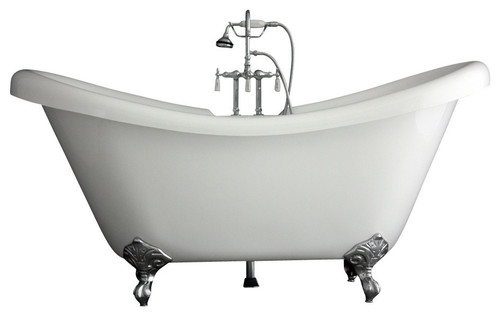
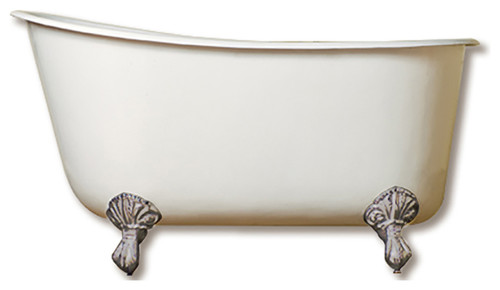
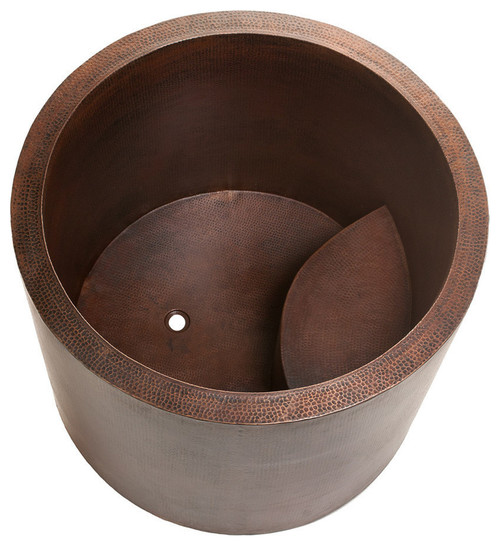
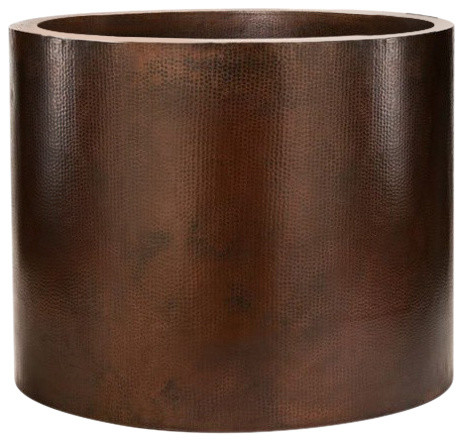
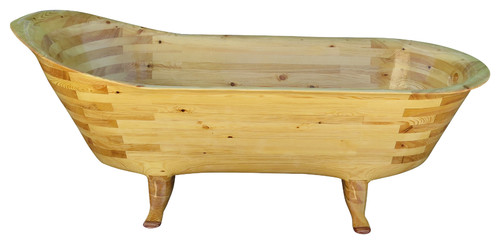
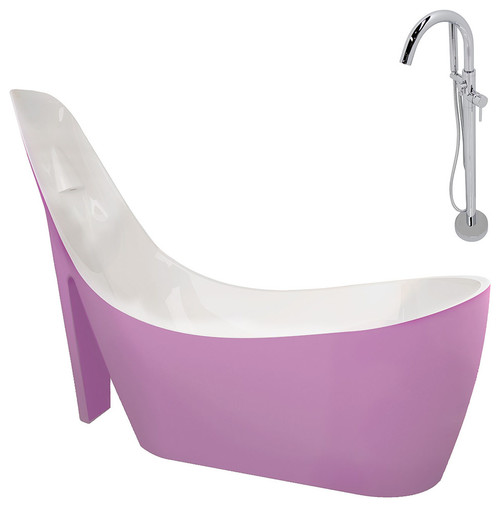
Bathroom Renovation: Our Free-standing Soaking Tub

After much thought, we finally chose our bath tub.  I stumbled upon the company, Baths of Distinction while looking at one of their other tubs on HOUZZ.com.
 So very many beautiful soaking tubs out there:

Double Slipper Tub (romantic!)

Cast iron,300 lbs, $1284

Japanese-style Soaking Tub


Artisan-carved Tub

Hammered-copper Soaking Tub
pc: Signature Hardware
$2149


Hollywood Glamour

ANZZI Gala 6.7 ft. Acrylic Freestanding Bathtub in Rose Pink and Kros Faucet
pc: Houzz


We had to work within certain parameters: our bathroom size, & tub's weight and price.  Below is our soaking tub of choice (via Baths of Distinction).  Classic. Simple. Ball/claw-foot.  Brushed Nickel finish. Small, but it'll do.
 Hoping and praying it is sturdy and will hold-up well thru the years:


******

Sunday, April 22, 2018

Yamaha Grand Pianos at Costco

I heard the unmistakable sound of tinkling pianos as I walked into Costco and saw gorgeous Piano beauties on display.  I was drawn to the one and only petite grand piano, of course. 
 Yamaha Corporation began in 1887 as a piano and reed organ manufacturer by Yamaha's founder, Japanese entrepreneur Torakusu Yamaha.  He was born on April 20, 1851. 
The amazing Bösendorfer brand is now a subsidiary of Yamaha Corporation.


baby grand piano (5' 3")


Piano Size Matters

List: Yamaha Musical Instruments

Yamaha Corporation

Bösendorfer Piano Manufacturer


********

Wednesday, April 11, 2018

Blond Asians

By 

The first time I was aware of my Asianness was when I asked my mother why I wasn’t blond. I was 5, and one of only a handful of Asian-Americans living in a predominantly white suburb in Michigan. Of course, my story is not unique — it’s an experience that’s probably shared by most American-born Asians as we shake off our perceived otherness and strive to prove our Americanness. There’s a term for it: “perpetual foreigner.”

“We’re the group that’s always told to go back where we came from, and it’s partly because we have a very strong immigrant population, so we all get bundled in regardless of whether we’re fourth generation or first — to everyone, you look like a foreigner,” said Erin Khue Ninh, associate professor of Asian-American studies at UC Santa Barbara.
If that’s the case, the most obvious and quickest way to subscribe to Western ideals of beauty is to lighten your hair. For Liz Rim, a stylist at the IGK Salon in the Chelsea neighborhood of Manhattan who began processing her strands five years ago, blond hair was her way of fitting in

“I grew up in Georgia where everyone was blond haired and blue eyed, and I always had this image of myself as an Asian Barbie,” Ms. Rim said. “Now it’s crazy because one-third of the Asians I see in New York or Los Angeles are blond.”
While Japanese celebrities have been changing their hair color as far back as the 1960s to emulate manga and anime characters, it was only a couple of years ago, on the heels of the ombré trend, that salons in this country began to see a spike in Asian clients looking to go full platinum.
Continue reading the main story
Ritsuko Hotaka, a colorist at Hair Kuwayama in the East Village, said that nearly 20 percent of her clients are asking to go blond. Kelly Su, the founder of Sonder Hair Studio in NoLIta, reported that of all her Asian customers, about 50 percent are going lighter. (Both salons have a largely Asian client base.)
“It has so much to do with the number of Asian-American bloggers who are becoming increasingly visible,” said Greta Lee, an actress who went platinum for the second half of last year. “There’s an army of Asians who are rising in the fashion world.”
Once a so-called editorial look adopted by a select few, like the popular Korean-American model Soo Joo Park, who found fame with her trademark ultralight locks, the aesthetic has paved the way for celebrities, street-style stars and more to follow suit. That includes the model and blogger Irene Kim, the designer Yoon Anh and the social-media influencers Vanessa Hong, Tina Leung and Margaret Zhang.
Jessica Wu, a stylist and model. CreditJoshua Bright for The New York Times
Not all of them went blond with the sole desire of mirroring Western beauty ideals. Ms. Hong was going through a major moment in her life and wanted a drastic change. Ms. Leung, after seven years with a Skrillex side shave, felt as if she was missing an edge.
“I had been seeing all these amazing Asian girls with blond hair, and I’m a sucker for advertisement,” she said, laughing. “If I see something over and over again, I kind of want it.”
This demand can be attributed in part to the 2014 invention of Olaplex, an active ingredient added to bleach to repair breakage from chemical damage, making the process of lifting 10 levels of pigment a more achievable feat. And 18 months ago, when the West Village salon Whittemore House introduced its Hair Paint formula that protects, strengthens and treats hair during the lightening process, its number of Asian clients doubled.
Despite these advances, it’s still challenging to go platinum. It can take up to 12 hours, with as many as six applications of bleach and a bill that can start at $400. That doesn’t take into account the upkeep needed, which includes a regimen of deep conditioning treatments, toners and purple shampoos, and a diligence about monthly touch-ups that can run upward of $200 a visit.
“You’re stripping your hair down to the follicle, to the point where you have this wiry Brillo pad left on your head,” Ms. Lee said. “That kind of rebellion, that’s not something to take lightly.”


For those who do, it may serve, symbolically, as an act of rebellion against the Asian good-girl trope, an extension of the “model minority” stereotype — conservative, quiet and hard-working. And since “Asian hair” has a history of being exoticized, often accompanied with descriptors like “long, silky smooth and jet black,” flipping it completely on its head becomes a way of taking back ownership and of reclaiming identity.
“Striving to present only one type of hairstyle not only accommodates narrow and fetishized expectations, it also freezes the ability to experiment creatively with appearance,” said Laura Miller, a professor of Japanese studies at the University of Missouri-St. Louis. “Bleached hair is often linked with other forms of body modification, such as piercing and tattooing, and therefore reflects a rejection of mainstream and old-fashioned femininity norms. What better way to signal thinking that is different from one’s parent generation than with a radically different appearance?”
Dr. Miller, for one, hopes this is a trend in which young Asian-Americans are pulling style and cultural cues from Asian countries. “What they see in Asia, especially in Japan and Korea, is a lot of hybridity and playfulness with hair colors and styles,” she said. “When Asian-Americans bleach their hair, they may not have in mind white Americans, but rather Asian celebrities such as Moga Mogami or Hyo-yeon Kim.”
One can make the argument that hair color and race are, or should be, mutually exclusive. “Caucasians are able to jump around, and it’s not a big deal for them to be blond, a redhead or brunet, whereas those same rules don’t apply to us,” Ms. Lee said. “It would be so empowering to be able to just try anything the way the rest of the world seems to be able to without any problems.”
Even if the intention is to fit in, having pale hair as an Asian has unpredictable effects. Ms. Leung said she has noticed more head-swiveling stares. Ms. Rim found it to be an outlet for creativity. And Jessica Wu, a stylist, producer and model, credits her six-month-old icy blond hair as the reason she is landing more modeling jobs, including the recent Glossier Lidstar campaign.
“Having blond hair has forced me to reassess how I wanted to present myself to the world,” Ms. Wu said. “It’s given me more confidence, it affects the way I dress and the way I perform as a model, and it’s allowed me to be more experimental in terms of my personal style.”
This freedom of expression feels right in line with the values of millennials and Gen Z-ers who prioritize experiences and authenticity above everything else. “I just wanted to shake up my look, but I think with any modification, it’s a break in tradition, and I think we’re more brazen now with what we do,” Ms. Leung said.
While it’s easy to write this off as a beauty trend, this growing community points to stirrings of change on a much larger scale, like the shaping of a new Asian-American identity.
“Maybe this is one part of unlocking the standards we’ve been imprisoned by,” Ms. Lee said. “It may seem like a silly, frivolous act, an act of vanity, but Asians and Asian-Americans have a history of being marginalized and ignored, so whatever the political statement is, maybe by having blond hair, it’s a very simple declaration: ‘Here I am. Pay attention to me. See me.’”
me; the closest I ever got to "blonde"

10.8.29.18